


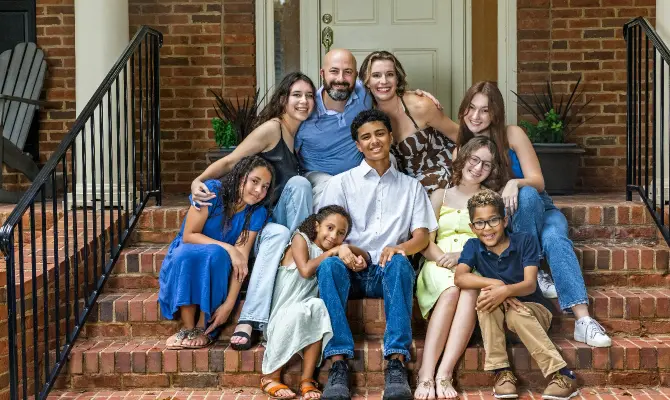
Families come in many forms. Estate plans should reflect that reality.
The traditional definition of family has changed significantly over time. Today, families may include married or unmarried partners, children from previous relationships, adopted children, children born through assisted reproductive technologies, and loved ones living across international borders.
Yet many of the laws governing inheritance, property rights, and estate planning were developed around more traditional family structures. As a result, the legal protections people assume are in place may not always reflect their relationships or intentions.
For individuals and families whose circumstances fall outside conventional assumptions, thoughtful estate planning is especially important. A well-designed plan does more than distribute assets. It helps ensure that the people who matter most are recognized, provided for, and protected.
Unmarried Partners: Relationships Don’t Always Come with Legal Protections
For couples who have built a life together without marrying, estate planning can be particularly important.
While married spouses generally receive certain legal protections automatically, unmarried partners often do not. Without appropriate planning, a surviving partner may have no automatic right to inherit property, make medical decisions, or manage financial affairs if the other partner becomes incapacitated.
These gaps can create difficult situations, particularly when an individual assumes that a long-term relationship will be treated the same as a legal marriage.
For unmarried couples, important considerations may include:
- Wills and trusts: Clearly identifying who should inherit assets and under what circumstances.
- Powers of attorney: Authorizing a partner to make financial or healthcare decisions when necessary.
- Beneficiary designations: Ensuring retirement accounts, life insurance policies, and other assets reflect current wishes.
- Property ownership: Understanding how jointly owned assets will be treated upon death.
Tax treatment also differs between married and unmarried couples, potentially creating additional considerations when transferring significant assets.
The key is intentionality. Rather than relying on assumptions about what a partner will be entitled to, couples should establish legal arrangements that reflect their wishes.

Blended Families: Balancing Different Needs and Expectations
Blended families introduce another layer of complexity to estate planning.
When one or both spouses have children from previous relationships, planning often involves balancing the financial security of a surviving spouse with the desire to preserve assets for children.
For example, an individual may want to ensure that a spouse can remain in the family home and maintain financial stability while also protecting an inheritance intended for children from a prior marriage.
Without careful planning, those goals can come into conflict.
Additional considerations may include whether stepchildren should inherit, how assets should be divided among children and half-siblings, and who should serve as trustee or make decisions about distributions.
There is also the question of what happens after the first spouse dies. If assets pass outright to the surviving spouse, that individual may later change their estate plan, potentially altering the inheritance originally intended for other family members.
Trusts and other planning strategies can help address these concerns, but the right approach depends on each family’s relationships, financial circumstances, and long-term goals.
Effective estate planning for blended families isn’t necessarily about treating everyone equally. It’s about making thoughtful decisions that reflect the individual’s intentions and the family’s unique dynamics.
Parentage and Evolving Family Relationships: The Importance of Clear Definitions
The ways families are formed have also evolved.
Adoption, assisted reproduction, and surrogacy have expanded the paths to parenthood. At the same time, legal recognition of parent-child relationships can vary depending on the circumstances and jurisdiction.
These differences can have significant implications for estate planning.
For example, an older trust may define beneficiaries using language that does not adequately account for children born through assisted reproductive technologies or certain legally recognized parent-child relationships.
Similarly, families may encounter complications when moving between states or countries with different rules governing parentage.
These issues underscore the importance of reviewing how estate planning documents define terms such as “children,” “descendants,” and “spouse.”
Clear, inclusive, and carefully drafted provisions can help ensure that an estate plan reflects the relationships an individual intends to recognize, rather than relying on definitions that may be outdated or subject to interpretation.

International Families: When Estate Planning Crosses Borders
For families with international connections, estate planning can become considerably more complicated.
An individual may be married to a non-U.S. citizen, have children living abroad, own property in another country, or expect to inherit assets from a family member overseas.
Each of these circumstances can introduce legal and tax considerations that may not arise in a purely domestic estate plan.
Different countries have different approaches to inheritance. While U.S. law generally provides substantial flexibility in determining how assets are distributed, some countries impose forced heirship rules that reserve portions of an estate for certain family members.
Other countries may not recognize trusts in the same way the United States does.
Tax treatment can also differ significantly. Transfers between spouses, for example, may receive different treatment when one spouse is not a U.S. citizen. Assets and trusts with international connections may also be subject to overlapping tax and reporting requirements.
Even a move from one jurisdiction to another can affect property rights and the treatment of existing estate planning arrangements.
For internationally connected families, coordination across jurisdictions is essential. Planning should account not only for where individuals live today, but also for where family members and assets may be located in the future.
When Should You Revisit Your Estate Plan?
Estate planning is not a one-time exercise. As families evolve, the documents designed to protect them should evolve as well.
Major life changes provide natural opportunities to review an existing plan, including:
- Marriage, divorce, or the beginning of a long-term partnership
- Remarriage or the formation of a blended family
- The birth or adoption of a child
- Changes in family relationships or intended beneficiaries
- A move to another state or country
- The acquisition of property or other assets abroad
- Significant changes in financial circumstances
Even without a major life event, periodic reviews can help identify outdated provisions, unintended consequences, or opportunities to better align an estate plan with current wishes.
An Estate Plan Should Reflect the Family You Have
No two families share exactly the same relationships, priorities, or financial circumstances. Their estate plans shouldn’t be identical, either.
The most effective estate planning begins with understanding the people involved, the relationships that matter, and the outcomes an individual hopes to achieve.
For some families, that means ensuring an unmarried partner has the authority to make important decisions. For others, it means balancing the interests of children and a surviving spouse, clarifying parent-child relationships, or navigating the complexities of international inheritance laws.
Whatever the circumstances, the objective remains the same: creating a plan that provides clarity, protects loved ones, and reflects the individual’s intentions.
At Prather Ebner Wilson, we help individuals and families navigate complex estate planning considerations with strategies tailored to their unique circumstances. Whether your family structure, assets, or relationships have changed, thoughtful planning can help ensure your wishes are carried forward.
To discuss your estate planning needs, contact the attorneys at Prather Ebner Wilson.
About the authors:

Ray Prather is a partner at Prather Ebner Wilson in Chicago, where he represents executors, trustees, beneficiaries and heirs in contested probate and fiduciary litigation alongside a trust and estate planning practice. He is a contributing author to the 2025 IICLE Practical Probate Handbook, has served on the ISBA Trusts and Estates Section Council and is active in the ABA Real Property, Trust and Estate Law Section.
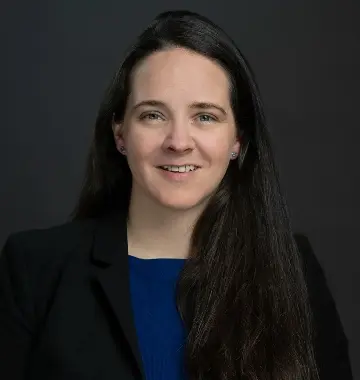
Marissa Dungey is Head of Private Wealth Law at Dungey Dougherty PLLC in Greenwich, Connecticut, where her practice centers on estate planning and trust structuring for families with complex and cross-border circumstances. She is ranked Band 1 for Private Wealth Law in Connecticut by Chambers High Net Worth, where she has been ranked for six consecutive years.